Madrid, Spain – May 31, 2019 (PRNewswire) Within the framework of the events of the Seventh Season of the Gazprom International Children’s Social Programme Football for Friendship, uniting participants from 211 countries and regions, a football training with the most nationalities in the world took place on May 31 in Madrid. At the end of the training, Football for Friendship received an official GUINNESS WORLD RECORDS® certificate.
Miquel Puig, the CEO of the Soccer Barcelona Youth Academy and Josep Gambau, the ex-coach of the FC Barcelona youth team conducted the training in which participated representatives of 57 nationalities. They helped Young Players master several new tricks before the Football for Friendship World Championship Final.
Achieving this record is a landmark event for the Football for Friendship programme that has the goal of promoting the values of equality of all cultures and nationalities. In just 7 years, the programme has gained 5 million supporters around the world, and united 6 thousand participants from 211 countries. I have no doubt that there are many wonderful victories ahead for the F4F project,” says the CEO of Soccer Barcelona Youth Academy Miquel Puig.
At the end of the training, Gazprom Chairman of the Board of Directors Viktor Zubkov has received the official certificate of obtaining the title from the GUINNESS WORLD RECORDS® representative and congratulated Young Participants of Football for Friendship on the new global victory.
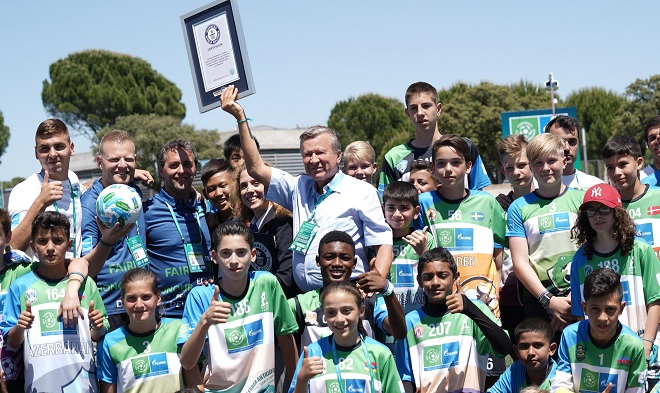
Football for Friendship sets new world record
One of the key events of the programme is the Football for Friendship World Championship. Traditionally, the International Teams of Friendship uniting athletes aged 12 of different nationalities, gender, and physical abilities participate in the competition. The Final of the World Championship will take place on the UEFA Pitch in Plaza Mayor on June 1.
The final events of the Seventh Season of the Gazprom International Children’s Social Programme Football for Friendship take place in Madrid from May 28 to June 2. On June 1, the participants of the programme will visit the 2019 UEFA Champions League at the Metropolitano Stadium.
Programme’s official Internet resources:
Photos and video materials for the media: http://media.footballforfriendship.com
Official Facebook account: https://www.facebook.com/FootballForFriendship/
Official YouTube channel: https://www.youtube.com/user/FOOTBALL4FRIENDSHIP
Official Wikipedia page: https://en.wikipedia.org/wiki/Football_for_Friendship
Official Twitter account: https://twitter.com/football4f
Official website: https://www.gazprom-football.com/en/home.htm
Photo – https://mma.prnewswire.com/media/895982/Gazprom_Football_for_Friendship.jpg
Logo – https://mma.prnewswire.com/media/837140/Gazprom_Football_for_Friendship_Logo.jpg